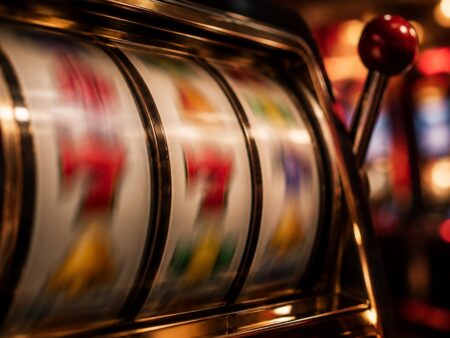
Online slots are simple by design: pick a stake, press spin, see what happens. That simplicity is part of why online slots are the most-played casino product in Ontario’s regulated market — and also why some players find it harder to stop than they expected.
This doesn’t mean slots are inherently addictive, or that playing them leads to harm for most people. Slot design draws on well-documented behavioural principles that are built to make sessions engaging — the same kind of design thinking used across mobile games and apps generally. Understanding how those mechanisms work doesn’t take away the entertainment value; it just makes it easier to play with a clear head.
Built for Fast, Continuous Rounds
A single spin typically resolves in a few seconds. That pace means a player can experience dozens of outcomes in the time it would take to play one hand of blackjack, each one delivering a small burst of anticipation and feedback. Continuous, rapid feedback loops like this are a well-known way to hold attention — it’s part of why sessions can feel shorter than they actually were.
Random, Variable Rewards Keep Attention
Every spin on a licensed slot is generated independently by a certified Random Number Generator. Outcomes don’t follow a pattern, and a losing streak doesn’t make a win “due” — a belief known as the gambler’s fallacy.
Behavioural research on variable reward schedules — rewards that arrive unpredictably rather than on a fixed pattern — consistently finds they sustain engagement more effectively than predictable ones. That’s the mechanism at work in a slot’s randomness: not knowing when the next win is coming is itself part of what keeps a player spinning.
Near Misses Can Feel Closer Than They Are
A near miss — two matching symbols with a third landing just off the payline, or a bonus symbol one position short — is still a loss. But it can register emotionally as closer to a win than a completely unrelated outcome would. Documented research on near-miss effects suggests this can encourage continued play, even though the odds of the next spin are unaffected by what just happened.
These are documented behavioural patterns in how games are built, not a clinical claim that any single feature causes gambling disorder. Everyone responds to game design differently, and most players enjoy slots without it becoming a problem. If you notice these mechanisms affecting your own play more than you’d like, that’s worth paying attention to.
Small Wins, Amplified by Sound and Light
Not every win increases your balance. A $2 stake returning $0.80 is, financially, a net loss — but the flashing animation and celebratory sound that accompany it are presented in a way that’s hard to distinguish from a genuine win. This is sometimes described as a “loss disguised as a win,” and it’s a well-studied feature of modern slot audio-visual design rather than an accident.
Bonus Rounds Add Unpredictable Peaks
Free spins, multipliers and mini-games appear unpredictably rather than on a schedule, which layers a second, larger variable reward on top of the base game. Waiting for a bonus round to trigger is its own form of anticipation, separate from the outcome of any individual spin.
The Choices You Make Don’t Change the Odds
Picking a game, setting a bet size and deciding when to stop are all genuine choices. What they don’t do is influence the random outcome of the next spin — that’s determined entirely by the RNG, regardless of stake size or how long you’ve been playing. Return-to-player figures describe long-run averages, not what happens on any one session; RTP alone doesn’t guarantee a win on any given spin.
Staying in Control
A few signs are worth checking in on periodically: playing longer than planned, chasing losses, losing track of time, or gambling to relieve stress rather than for entertainment. None of these mean something is seriously wrong on their own, but noticing them early makes it easier to step back before they become a bigger pattern.
Licensed Ontario operators provide tools that put real limits around play — deposit and loss limits, reality checks, cooling-off periods and self-exclusion. How Ontario’s responsible gambling tools work covers each of these in more detail, and our responsible gambling guide has support resources if you want to talk to someone.
Frequently Asked Questions
Are slot games designed to be addictive?
Slots are designed to be entertaining and engaging using documented behavioural mechanisms such as variable rewards and near misses. That’s different from saying any individual game causes gambling disorder, which is a clinical diagnosis, not a design feature.
What is a near miss, exactly?
A losing spin that lands visually close to a winning combination or bonus trigger. It remains a full loss — the closeness is a visual effect, not an indicator that a win was nearly reached.
Does a losing streak make a win more likely?
No. Each spin is generated independently, so previous results have no bearing on what comes next.
What’s a practical first step for playing more responsibly?
Setting a deposit or loss limit before you start playing — while you’re thinking clearly, not mid-session — is one of the most effective tools available.