Knowing how to bet is only part of the picture.
Knowing when to stop is far more important.
Most serious gambling problems don’t start with reckless behaviour. They start with small financial signals that are easy to ignore – until they aren’t.
This article explains the financial red flags that indicate it’s time to stop betting, take a break, or reassess your relationship with gambling.
Stopping Is Not Failure – It’s Risk Control
Many players believe stopping means:
- giving up
- admitting defeat
- losing confidence
In reality, stopping is a protective decision, not an emotional one.
Professional risk management always includes clear exit points. Betting should be no different.
Red Flag #1: You Bet With Money You Can’t Replace Easily
This is the most important warning sign.
If betting losses would affect:
- rent or mortgage
- bills or debt repayments
- savings meant for essentials
- financial security
Then betting has crossed a critical boundary.
Gambling should only involve disposable income – money that has no impact on your stability if lost.
Red Flag #2: Losses Change Your Financial Behaviour
Pay attention if losses cause you to:
- delay payments
- borrow money
- use credit to gamble
- move funds between accounts to keep betting
At this point, betting is influencing your financial decisions – not the other way around.
That’s a clear signal to stop.
Red Flag #3: You Increase Stakes to “Fix” the Situation
Raising stakes to recover losses is one of the most dangerous behaviours.
Typical thoughts:
- “I just need one good win”
- “I’ll lower stakes after this”
- “This bet gets me back on track”
This isn’t strategy.
It’s financial pressure disguised as confidence.
Red Flag #4: You Lose Track of How Much You’ve Lost
If you:
- avoid checking totals
- feel unsure about recent losses
- prefer not to look at balances
That avoidance is itself a warning sign.
Healthy betting requires full financial awareness.
Avoidance usually means the numbers feel uncomfortable.
Red Flag #5: Gambling Affects Your Ability to Budget Normally
Watch for changes like:
- skipping budgeting altogether
- ignoring spending plans
- treating betting as a priority expense
When gambling disrupts everyday financial structure, it’s no longer recreational.
Red Flag #6: You Feel Financial Relief Only When Betting
This is subtle but serious.
If betting:
- feels like an escape from financial stress
- temporarily relieves money-related anxiety
- creates hope of solving problems
Then betting has shifted from entertainment to emotional coping.
That’s a strong signal to stop and reset.
Red Flag #7: You Break Your Own Financial Limits Repeatedly
Limits only work if they’re respected.
If you:
- increase limits often
- remove restrictions quickly
- justify breaking rules
Then the limits are no longer protective.
At that point, external tools or a pause become necessary.
What To Do When You Notice These Red Flags
The correct response is not optimisation.
Do this instead:
- Stop betting temporarily
- Activate deposit, loss, or time limits
- Take a cooling-off period
- Review finances without betting involved
There is no urgency to continue.
There is urgency to protect yourself.
Why Taking a Break Is the Smartest Financial Move
A break:
- costs nothing
- prevents deeper losses
- restores perspective
- reduces emotional pressure
Most financial damage happens when players refuse to pause.
Stopping early is always cheaper than recovering later.
Responsible Gambling Tools Exist for a Reason
Licensed platforms offer tools like:
- deposit limits
- loss limits
- session limits
- self-exclusion
Using them is not a sign of weakness.
It’s a sign of control.
Final Thoughts
Betting should never put your financial stability at risk.
When financial red flags appear, the correct move is simple:
Stop. Pause. Reassess.
You can always return later – with clarity and control.
Protecting your finances is not about winning less.
It’s about not losing more than you can afford.
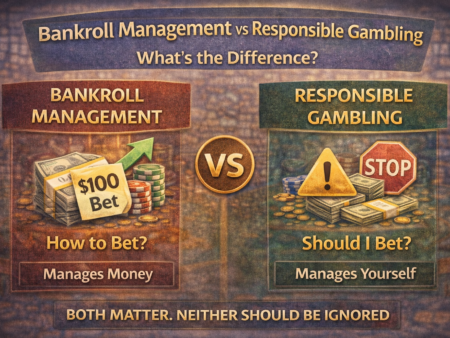
- Bankroll Management vs Responsible Gambling – What’s the Difference?
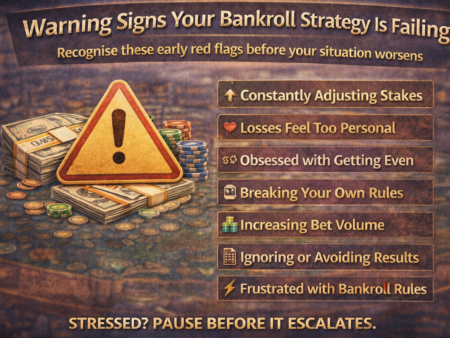
- Warning Signs Your Bankroll Strategy Is Failing
- Why Chasing Losses Destroys Your Bankroll
- Responsible Gambling Tools Explained