Online casinos are surrounded by myths and misconceptions. Many players believe there are hidden systems, patterns, or tricks that can be exploited to guarantee wins or predict outcomes.
This guide explains the most common myths about casino systems, why they persist, and what actually determines results in online casino games.
Myth 1: Casinos Control Individual Player Outcomes
One of the most common beliefs is that online casinos can adjust results for specific players – for example, letting players win early and then forcing losses later.
In reality:
- licensed online casinos use certified Random Number Generators (RNGs),
- outcomes are generated independently for each spin or hand,
- casinos do not manually control individual results.
While casinos profit from long-term mathematics, they do not track or manipulate single players’ outcomes.
Myth 2: A Game Is “Due” to Pay After Many Losses
Many players believe that if a slot or game hasn’t paid out for a long time, it must be close to a win.
This is false.
Casino games with RNGs:
- have no memory of past results,
- treat every spin or hand as a new, independent event,
- do not “balance out” short-term losses.
A long losing streak does not increase the chance of an upcoming win.
Myth 3: Winning Early Means the Casino Will Tighten the Game
Some players think that after a big win, the casino will reduce payout chances to recover money.
In licensed online casinos:
- game settings are fixed by the software provider,
- payout percentages cannot be changed per player or session,
- casinos cannot dynamically adjust odds on individual machines or games.
Short-term wins or losses do not affect future outcomes.
Myth 4: Betting Systems Can Beat the Casino
Popular betting systems claim to guarantee profits by adjusting bet sizes after wins or losses.
In reality:
- betting systems do not change the house edge,
- increasing bets after losses increases risk,
- bankroll limits usually cause systems to fail.
Betting systems may change variance, but not the underlying mathematics.
Myth 5: Casinos Use “Hot” and “Cold” Games to Trap Players
Players often believe casinos promote “hot” games that are paying out or hide “cold” games that aren’t.
In practice:
- all games operate independently,
- promotion is based on popularity, not payout timing,
- payout rates are averaged over massive sample sizes.
A game being popular does not mean it is paying more or less at any given moment.
Myth 6: You Can Read Patterns in Random Games
Humans naturally look for patterns, even in random data.
Casino games:
- are designed to produce random sequences,
- can create streaks that appear meaningful,
- do not follow predictable cycles.
Perceived patterns are usually coincidences, not signals.
Why These Myths Persist
Casino myths continue because:
- wins feel personal and emotional,
- losses create frustration and the need for explanations,
- misinformation spreads easily online.
Understanding how casino systems actually work helps players make calmer, more rational decisions.
What Actually Determines Casino Results
The real factors behind casino outcomes are:
- RNG technology,
- house edge,
- RTP percentages,
- game volatility,
- bankroll management.
None of these depend on secret systems or player tracking.
Final Thoughts
Online casinos do not rely on hidden tricks or player-specific manipulation. They rely on mathematics, probability, and long-term averages.
Players who understand this:
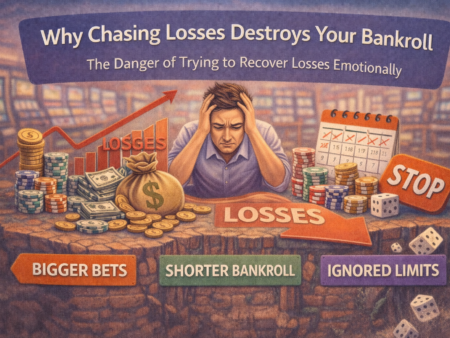
- avoid chasing losses,
- stop believing in false systems,
- approach casino games as entertainment, not income.
Knowledge is the best strategy.
- House Edge Explained
- Bankroll Management for Casino Players
- How Online Casinos Work in Canada
- RTP Explained – What It Means for Casino Players
- Responsible Gambling for Casino Players