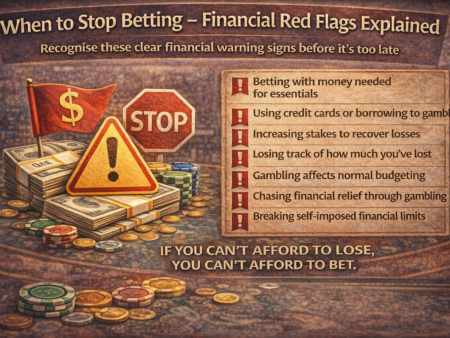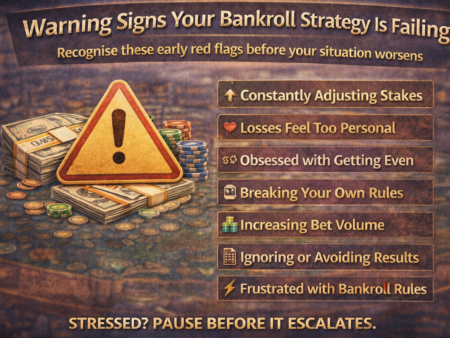
Moving up in stakes is exciting.
Moving down feels uncomfortable.
And yet, most bankroll disasters happen exactly at this point – when players either move up too early or refuse to move down when they should.
This guide explains how to move up and down in stakes safely, without ego, panic, or bankroll destruction – whether you play poker, bet on sports, or spend time in online casinos.
Why Stake Movement Is One of the Most Dangerous Moments
Bankroll management usually breaks not during normal play, but during transitions.
Typical danger zones:
- After a winning streak
- After a big score
- During a downswing
- When confidence or frustration takes over
Stake movement magnifies mistakes because risk increases faster than skill or discipline.
Moving Up in Stakes – When Is It Actually Safe?
Moving up should be a planned decision, never an emotional one.
You are ready to move up when:
- Your bankroll comfortably exceeds recommended thresholds
- Results are stable over a meaningful sample
- Current stakes feel routine, not stressful
- Losing a session at higher stakes wouldn’t affect your mindset
If moving up feels urgent, it’s usually too early.
Bankroll-Based Rules for Moving Up
General guidelines:
- Move up only when you have 20–30% more than the minimum bankroll requirement
- Take “shots” with a small portion of your bankroll
- Be ready to move back down immediately
Example:
- Required bankroll: 50 buy-ins
- Move-up bankroll: 60–65 buy-ins
That buffer protects you from variance, not bad play.
Taking Shots Without Blowing Your Bankroll
A controlled shot is not a full commitment.
Safe shot-taking rules:
- Allocate a fixed number of buy-ins for the higher stake
- Stop immediately if those buy-ins are lost
- Never reload from the main bankroll
If the shot works, great.
If it doesn’t, nothing breaks.
Shots are experiments, not promotions.
Moving Down in Stakes – Why It’s a Strength, Not a Failure
Moving down feels bad because of ego – not logic.
In reality:
- Professionals move down regularly
- It preserves confidence and decision quality
- It protects the bankroll during variance
Refusing to move down is one of the fastest ways to go broke.
Clear Signals You Should Move Down
You should move down when:
- Your bankroll drops near minimum thresholds
- You feel pressure in normal spots
- You start thinking about money instead of decisions
- Losses affect your mood or sleep
Moving down early prevents emotional spirals.
The Psychological Trap of “Just One More Level”
One of the most dangerous thoughts:
“I’m almost back – just one more level.”
This mindset:
- Delays corrective action
- Encourages risk-taking
- Turns manageable losses into major damage
Bankrolls don’t collapse suddenly.
They erode slowly while players wait too long to adjust.
Stake Movement in Different Formats
Poker
- Move up with excess buy-ins, not confidence
- Move down to protect decision quality
- Separate rules for cash games and tournaments
Sports Betting
- Increase stake size only when bankroll grows, not after wins
- Reduce stakes during drawdowns
- Never adjust stakes daily
Online Casinos
- Avoid moving up stakes after wins
- Stick to fixed session and loss limits
- Higher stakes = faster variance
Across all formats, the rule is the same: structure beats emotion.
Why Bankroll Flexibility Keeps You in the Game
A flexible bankroll strategy:
- Reduces stress
- Improves decision-making
- Increases long-term survival
Rigid thinking (“I must stay here”) leads to forced decisions.
Flexibility is not weakness.
It’s risk management.
Common Stake Movement Mistakes
Players often go broke by:
- Moving up too fast after a win
- Staying too high during downswings
- Ignoring bankroll thresholds
- Treating higher stakes as a reward
- Letting ego override structure
Most of these mistakes have nothing to do with skill.
Final Thoughts
Moving up and down in stakes is not about confidence.
It’s about timing, discipline, and protection.
The strongest players:
- Move up slowly
- Move down quickly
- Treat stake level as a tool, not a status
Your goal is not to play the biggest game today.
It’s to still be playing tomorrow.
- What Is Bankroll Management?
- How Many Buy-Ins Do You Really Need to Play Poker Safely?
- Poker Variance Explained – Why Swings Are Normal
- Why Chasing Losses Destroys Your Bankroll