Casino games are designed to be fast, engaging, and unpredictable. That’s part of the appeal – and also the reason why setting a clear casino budget is essential before you start playing.
Many players don’t lose control because they gamble irresponsibly. They lose control because they never defined a budget in the first place.
This guide explains how to set a realistic casino budget, how to manage it properly, and most importantly – how to stick to it once the game begins.
What Is a Casino Budget?
A casino budget is the maximum amount of money you are willing to spend on casino play over a defined period of time.
It is:
- Separate from everyday finances
- Fully affordable to lose
- Treated as entertainment spending, not investment
A casino budget is not:
- Money meant to be won back
- A target to hit
- A guarantee of playtime
Once it’s gone, the session ends.
Why Casino Budgeting Is Different From Sports Betting
Casino games differ from sports betting in one key way:
the house always has a mathematical edge.
That means:
- Short-term wins are possible
- Long-term losses are expected
Because of this, casino budgeting focuses more on:
- Loss control
- Session management
- Emotional discipline
Rather than chasing profitability.
Step 1: Decide Your Casino Budget Before You Play
Your casino budget should be decided before logging in, not during a session.
Ask yourself:
- How much money can I comfortably lose this week or month?
- Would losing this amount affect my bills or savings?
- Am I okay if this money is gone today?
If the answer to any of these is “no”, the budget is too high.
Step 2: Separate Your Casino Budget From Other Funds
Never mix casino money with:
- Rent or mortgage funds
- Savings
- Emergency money
- Credit
Best practice:
- Use a dedicated casino balance
- Deposit only what you’ve budgeted
- Avoid topping up mid-session
Separation creates friction – and friction prevents impulsive decisions.
Step 3: Set Session Limits, Not Just Deposit Limits
Many players set deposit limits but ignore session limits.
A session limit defines:
- How long you play
- How much you can lose in one sitting
Example:
- Monthly casino budget: $200
- Session limit: $40 per session
Once the session limit is reached, you stop – regardless of how you feel.
Step 4: Choose Games That Match Your Budget
Not all casino games behave the same.
Key differences:
- Slots: high volatility, fast losses
- Table games: slower pace, lower volatility
- Live casino: longer sessions, higher minimum bets
If your budget is small:
- Avoid high-volatility slots
- Choose lower-stake table games
- Play fewer sessions
Your game choice should match your bankroll, not your emotions.
Step 5: Accept Losses as Part of the Budget
One of the hardest habits to build is accepting losses without trying to recover them.
Chasing losses usually leads to:
- Larger bets
- Riskier games
- Emotional decisions
A healthy mindset:
- The budget exists to be spent
- Wins are a bonus, not a target
- Losses end the session, not trigger a reaction
Step 6: Know When to Walk Away – Even When Winning
Winning can be just as dangerous as losing.
Common mistake:
- Increasing stakes after a win
- Extending sessions unnecessarily
- Giving winnings back
Budget discipline applies both ways:
- Set a win limit if needed
- Lock in profits by cashing out
- Treat wins as session-ending moments
Common Casino Budgeting Mistakes
Some patterns appear again and again:
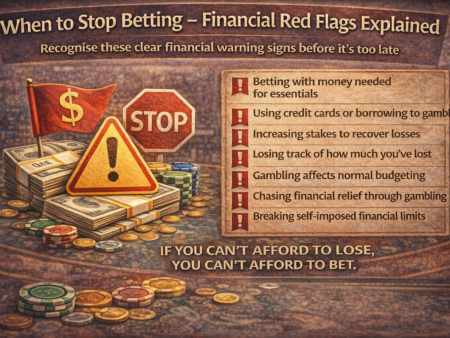
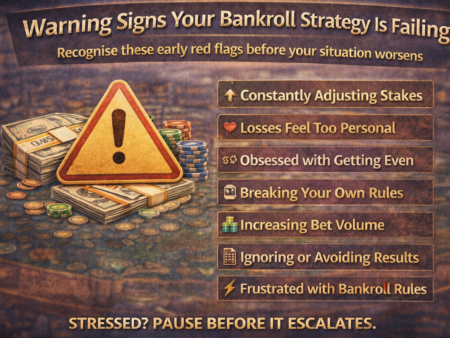
- Depositing more after losses
- Playing without a defined budget
- Increasing stakes to “speed things up”
- Switching games when losing
- Using casino play to change mood
Recognising these behaviours early prevents damage later.
Casino Budgeting vs Bankroll Management
While related, these concepts serve different purposes:
- Bankroll management: long-term risk control
- Casino budgeting: short-term loss control
Good casino players use both:
- A clear budget
- Firm session limits
- Realistic expectations
Final Thoughts
Casino games are entertainment first. The moment your budget becomes flexible, control starts slipping.
A clear casino budget:
- Protects your finances
- Reduces emotional play
- Keeps gambling enjoyable and controlled
You don’t need to win to play responsibly.
You need to know when to stop.
- What Is Bankroll Management?
- Bankroll Management for Casino Players
- Common Bankroll Mistakes Sports Bettors Make
- Responsible Gambling section