A bankroll strategy doesn’t usually fail overnight.
It breaks down slowly — through small compromises, emotional decisions, and ignored warning signs. Most players don’t notice the problem until the damage is already done.
This article explains the early red flags that suggest your bankroll strategy is no longer protecting you — even if, on paper, it still looks “correct”.
Bankroll Failure Is Often Behavioural, Not Technical
Many players assume a failing bankroll strategy means:
- bad maths
- poor stake sizing
- not enough buy-ins
In reality, the most common failures come from behaviour, not calculations.
A strategy can be technically sound and still fail if your mindset changes.
1. You Constantly Adjust Stakes Based on Recent Results
One of the first warning signs is reactive staking.
Examples:
- Increasing stakes after a win “because things are going well”
- Reducing stakes after losses out of fear
- Changing bet sizes daily or session by session
A healthy bankroll strategy is boring and consistent.
Frequent adjustments usually signal emotional involvement.
2. Losses Feel Heavier Than They Used To
If a normal losing session:
- affects your mood
- lingers in your thoughts
- makes you impatient
that’s a red flag.
Proper bankroll management should make losses feel expected, not personal. When losses start to feel painful, your exposure may be too high — or your relationship with money has changed.
3. You Think About “Getting Back” Instead of Process
This is one of the clearest signals.
Phrases like:
- “I just need one good day”
- “I’m almost back to even”
- “I’ll fix this with one solid bet”
These thoughts indicate a shift from process-focused thinking to outcome-focused thinking.
At that point, bankroll rules are no longer guiding decisions.
4. You Break Your Own Rules — Then Justify It
Rule-breaking rarely starts with big decisions.
It starts small:
- “Just this once”
- “The odds are too good to skip”
- “It’s still within reason”
When rule-breaking becomes justifiable in your mind, the strategy has already lost authority.
5. You Increase Volume to Compensate for Results
Playing more to recover losses is another subtle warning sign.
This includes:
- more bets per day
- longer sessions
- entering games you usually avoid
Even if stake size stays the same, increased volume increases risk.
This behaviour often masks frustration or impatience.
6. You Stop Tracking or Reviewing Results Honestly
Avoiding data is rarely accidental.
Warning signs include:
- delaying result tracking
- ignoring drawdowns
- focusing only on wins
- avoiding long-term performance reviews
A failing bankroll strategy often coincides with reduced transparency — especially with yourself.
7. Your Bankroll Strategy Feels Like a Burden
When bankroll rules:
- feel restrictive
- cause frustration
- feel “in the way”
it usually means your expectations have shifted.
A healthy strategy feels supportive, not limiting. When it feels like an obstacle, it’s time to reassess.
When These Signs Appear, Strategy Is No Longer the Solution
This is the key point.
If you recognise several of these signs, the issue may no longer be:
- stake sizing
- bet selection
- variance
It may be emotional or behavioural.
At this stage, responsible gambling principles matter more than optimisation.
What to Do If You Notice These Warning Signs
The safest response is not to “fix” the strategy.
Instead:
- Reduce stakes or pause play
- Take a short break
- Revisit your original limits
- Remove pressure to recover losses
Sometimes the smartest move is to do nothing.
Why Early Awareness Matters
Ignoring these warning signs leads to:
- deeper drawdowns
- emotional betting
- broken discipline
- financial stress
Recognising them early preserves:
- bankroll
- confidence
- enjoyment
A pause is far cheaper than recovery.
Final Thoughts
A bankroll strategy is meant to protect you.
When it stops doing that, it’s not a failure — it’s a signal.
Listening to warning signs early is not weakness.
It’s control.
The most responsible bettors are not those who never struggle — but those who know when to stop and reset.
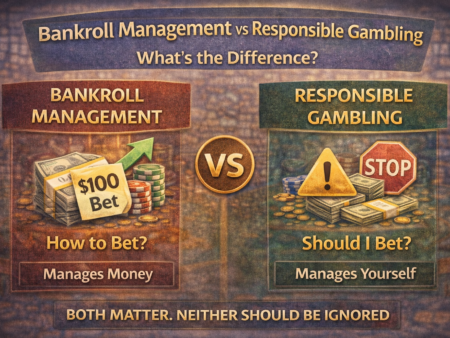
- Bankroll Management vs Responsible Gambling – What’s the Difference?
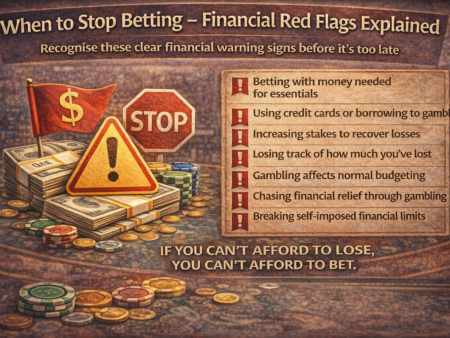
- When to Stop Betting – Financial Red Flags Explained
- Why Chasing Losses Destroys Your Bankroll
- What Is Bankroll Management?