Many players assume that bankroll management and responsible gambling mean the same thing.
They don’t.
While both concepts aim to reduce harm and improve decision-making, they serve different purposes and apply at different moments in a player’s journey.
Understanding the difference is essential – not just for protecting money, but for knowing when skill and discipline are no longer enough.
What Is Bankroll Management?
Bankroll management is a technical discipline.
It focuses on:
- How much you risk per bet
- How you size your stakes
- How you survive variance
- How long your bankroll lasts
Its core question is:
How do I manage my money so that variance doesn’t wipe me out?
Bankroll management assumes:
- You are in control
- You are making conscious decisions
- You are treating betting as a calculated activity
It’s a tool for players who are still playing.
What Is Responsible Gambling?
Responsible gambling is a protective framework.
It focuses on:
- Player wellbeing
- Emotional and financial limits
- Early warning signs
- When to reduce or stop gambling
Its core question is:
Is gambling still healthy and safe for me right now?
Responsible gambling applies even when bankroll management fails – or when gambling stops being recreational.
The Key Difference in One Sentence
- Bankroll management is about how you play
- Responsible gambling is about whether you should be playing at all
They overlap, but they are not interchangeable.
Why Bankroll Management Alone Is Not Enough
Many players believe:
“If I manage my bankroll properly, I’ll always be fine.”
This is not always true.
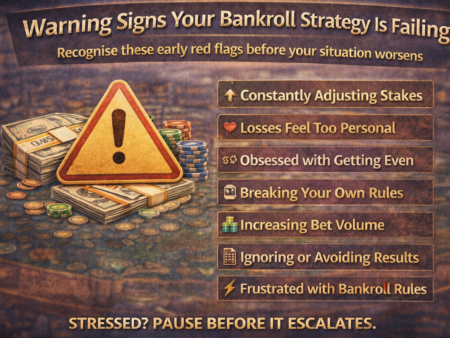
Bankroll management can fail when:
- Emotions override discipline
- Losses trigger stress or panic
- Betting becomes a coping mechanism
- Financial pressure exists outside gambling
At that point, the problem is no longer technical.
It’s behavioral.
When Responsible Gambling Takes Priority
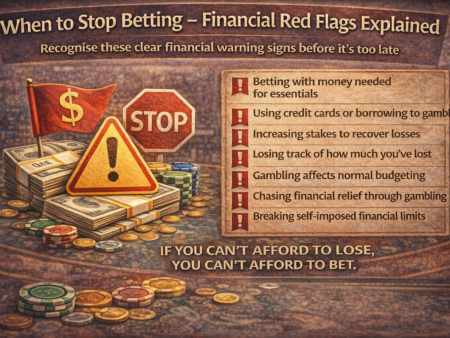
Responsible gambling becomes essential when:
- You chase losses despite having rules
- You increase stakes to “fix” results
- You feel anxiety or guilt after betting
- You gamble with money needed elsewhere
- You think about gambling more than intended
These are signals that risk management has turned into damage control.
How the Two Concepts Work Together
Think of them as layers:
- Bankroll management
- First line of defense
- Controls variance and exposure
- Responsible gambling
- Second line of defense
- Protects mental and financial health
When bankroll rules stop working, responsible gambling steps in.
Common Misconceptions
“Responsible gambling is only for problem gamblers”
False.
It’s for anyone who wants to avoid becoming one.
“Good bankroll management means I don’t need limits”
Also false.
Limits exist for moments when discipline weakens.
“Stopping means failure”
No.
Stopping means protecting future choices.
Why This Distinction Matters in Canada
Canadian regulators and player protection frameworks emphasize:
- Informed decision-making
- Clear financial limits
- Early intervention
Understanding this distinction:
- Builds trust with players
- Aligns with iGaming Ontario principles
- Signals long-term responsibility
This isn’t about restriction.
It’s about sustainability.
Practical Takeaway for Players
Ask yourself two separate questions:
- Am I managing my bankroll correctly?
- Is gambling still serving me in a healthy way?
If the answer to the second question becomes unclear, no betting strategy will fix that.
Final Thoughts
Bankroll management helps you play smarter.
Responsible gambling helps you stay safe.
One improves performance.
The other protects wellbeing.
Knowing when to switch focus from one to the other is a sign of maturity, not weakness.
The strongest players aren’t the ones who never lose.
They’re the ones who know when to pause.
- Warning Signs Your Bankroll Strategy Is Failing
- When to Stop Betting – Financial Red Flags Explained
- Why Chasing Losses Destroys Your Bankroll
- What Is Bankroll Management?