Bankroll management is the foundation of responsible and sustainable sports betting. Without it, even good betting decisions can lead to unnecessary losses and frustration. With it, betting becomes more controlled, predictable, and easier to manage over time.
This guide explains bankroll management for sports betting, why it matters, and how Canadian players can apply it in practice.
What Is a Betting Bankroll?
Your bankroll is the total amount of money you set aside specifically for betting.
Key points:
- it is separate from everyday finances
- it represents money you can afford to lose
- it defines how much you can safely stake over time
A bankroll is not a single bet – it’s the entire budget behind your betting activity.
Why Bankroll Management Matters
Without bankroll management, players often:
- bet too much on single events
- chase losses
- make emotional decisions
Good bankroll management helps you:
- control risk
- survive losing streaks
- keep betting decisions consistent
It doesn’t eliminate losses, but it prevents small losses from becoming big problems.
How Much Should Your Bankroll Be?
There is no universal “correct” bankroll size.
What matters is that:
- it fits your personal budget
- losing it would not affect your finances
- it feels comfortable, not stressful
For some players, a bankroll might be small. For others, larger. The amount is less important than how it’s managed.
How Much to Bet Per Wager
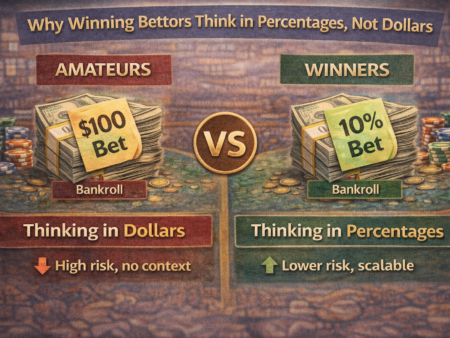
A common bankroll rule is to bet a small percentage of your total bankroll per bet.
Typical ranges:
- 1–2% for conservative bettors
- up to 3% for more experienced players
Example:
- bankroll: $1,000
- 2% stake per bet → $20 per wager
This approach limits damage during losing streaks and keeps betting sustainable.
Flat Betting vs Variable Stakes
Two common approaches to staking:
Flat Betting
- same stake on every bet
- simple and disciplined
- popular with beginners
Variable Stakes
- stake size changes based on confidence
- requires strong discipline
- easier to misuse without experience
For most players, flat betting is the safer and more consistent option.
Why Chasing Losses Breaks Bankrolls
Chasing losses happens when players increase stakes after losing.
This often leads to:
- emotional decisions
- oversized bets
- rapid bankroll depletion
A sound bankroll strategy accepts losses as part of betting and sticks to predefined stakes.
Tracking Your Bets
Tracking helps you understand:
- how your bankroll changes over time
- which bets perform better
- whether your strategy is working
Even simple tracking – dates, stakes, odds, outcomes – can improve long-term discipline.
Bankroll Management and Long-Term Thinking
Sports betting involves variance. Even good decisions don’t always win.
- protects you during downswings
- allows time for better decisions to matter
- keeps betting enjoyable rather than stressful
It supports long-term thinking instead of short-term reactions.
Common Bankroll Management Mistakes
Beginners often:
- bet inconsistent amounts
- increase stakes impulsively
- ignore losing streaks until it’s too late
Clear rules and consistency help avoid these traps.
Final Thoughts
Bankroll management is not about winning more bets – it’s about losing less when things don’t go your way. It gives structure to betting and keeps control in your hands, not the odds.
For Canadian players, bankroll management is one of the most important skills to learn before exploring more advanced betting strategies.
Sports Betting Strategies That Actually Make Sense
Flat Betting Strategy Explained
Common Beginner Mistakes in Sports Betting
Sports Betting Odds Explained
Sports Betting Calculator